
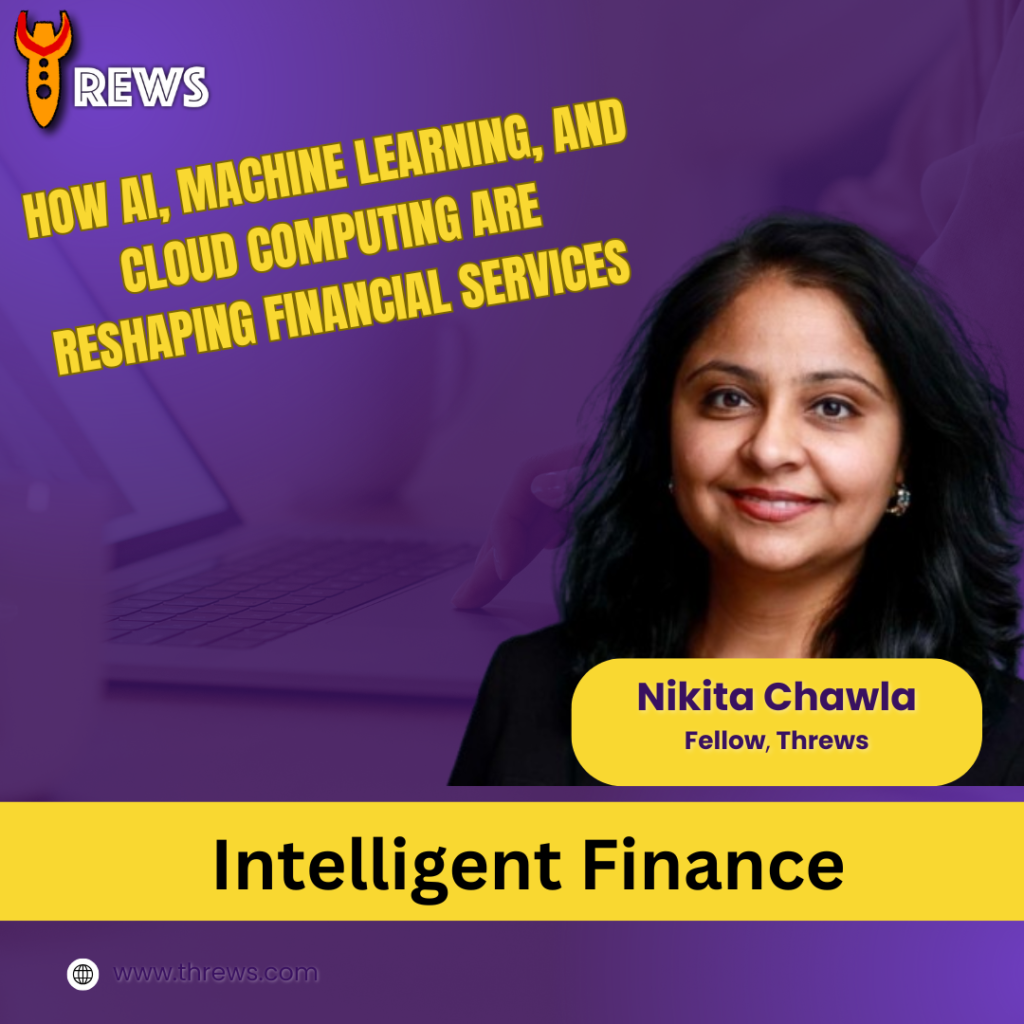
Intelligent Finance: How AI, Machine Learning, and Cloud Computing Are Reshaping Financial Services
Written by Nikita Chawla
Director, Product Management | Threws Fellow
The financial services industry is undergoing a profound transformation driven by intelligent technologies. Artificial Intelligence, Machine Learning, and Cloud Computing are no longer emerging trends; they are foundational pillars reshaping how financial institutions operate, innovate, and deliver value to customers. Together, these technologies are enabling smarter decision-making, greater agility, enhanced security, and deeply personalized financial experiences.
The Rise of Intelligent Finance
Intelligent finance refers to the integration of advanced analytics, automation, and scalable digital infrastructure into core financial operations. Today’s customers expect seamless, real-time, and secure services. Meeting these expectations requires systems that can learn from data, adapt to change, and scale efficiently. AI, ML, and cloud platforms make this possible by transforming traditional financial models into intelligent, data-driven ecosystems.
Artificial Intelligence as a Strategic Enabler
AI is redefining financial services by automating complex processes and augmenting human decision-making. From intelligent chatbots and virtual assistants to automated compliance checks and fraud detection, AI improves operational efficiency while reducing risk. In product management and program delivery, AI-driven insights help leaders prioritize features, optimize roadmaps, and align products more closely with customer needs.
AI also plays a critical role in predictive analytics, enabling organizations to anticipate market trends, customer behavior, and potential risks with greater accuracy than ever before.
Machine Learning Driving Data-Driven Decisions
Machine Learning takes AI a step further by continuously learning from data and improving outcomes over time. In finance, ML models are used for credit scoring, risk assessment, algorithmic trading, and personalization of financial products. These models can analyze vast datasets at scale, uncovering patterns that traditional methods often miss.
For agile and product-driven teams, ML supports faster experimentation and evidence-based decision-making. By leveraging real-time feedback loops, organizations can iterate quickly and deliver solutions that are both innovative and reliable.
Cloud Computing as the Foundation for Scale and Agility
Cloud computing provides the infrastructure backbone for intelligent finance. It enables scalability, flexibility, and cost efficiency while supporting rapid deployment of AI and ML solutions. Cloud-native architectures allow financial systems to handle fluctuating workloads, integrate new technologies seamlessly, and support global operations without compromising performance.
From an agile delivery perspective, cloud platforms empower cross-functional teams to collaborate more effectively, accelerate time-to-market, and maintain high availability and resilience.
Security, Trust, and Compliance in a Digital Era
As financial services become more intelligent and interconnected, cybersecurity and data governance remain critical priorities. AI-powered security tools enhance threat detection and response, while cloud-based compliance frameworks help organizations meet evolving regulatory requirements.
Building trust is essential in intelligent finance. Responsible AI practices, transparency in data usage, and robust governance models ensure that innovation aligns with ethical and regulatory standards.
The Road Ahead
The convergence of AI, Machine Learning, and Cloud Computing is not just reshaping financial services; it is redefining leadership, product strategy, and customer engagement. Organizations that embrace intelligent finance will be better positioned to innovate responsibly, respond to change, and deliver meaningful value in an increasingly digital world.
As a Threws Fellow and product leader, I believe the future of finance lies in balancing technological excellence with agile execution and human-centered design. Intelligent finance is not about replacing people with machines; it is about empowering teams and customers through smarter, more adaptive systems.
About the Author
Nikita Chawla is a Director of Product Management with extensive experience in program management, product development, and agile delivery. A Certified Scrum Master and Threws Fellow, she is passionate about leveraging intelligent technologies to drive innovation, scalability, and customer-centric transformation in financial services.