
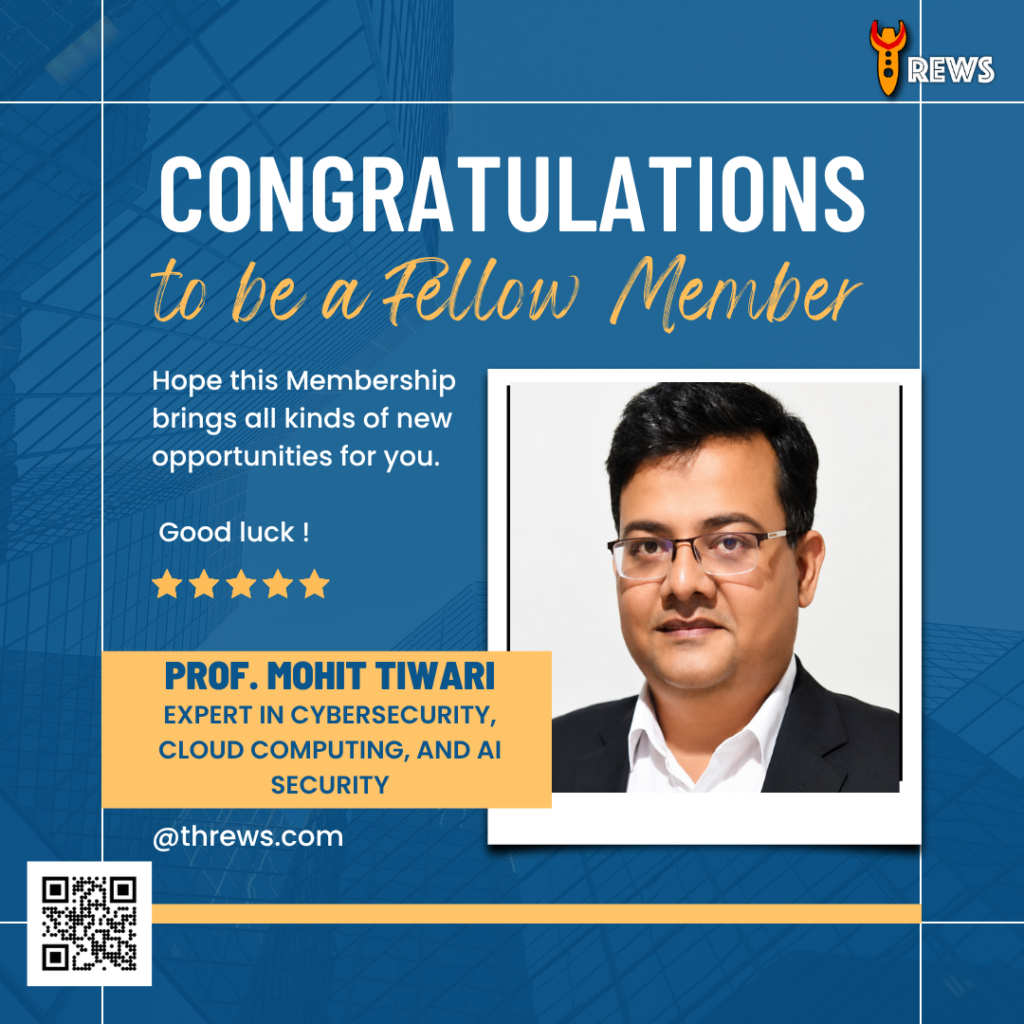
In an era of rapid technological transformation, cybersecurity, cloud computing, artificial intelligence, and data-driven innovation are reshaping the future of engineering education. Bridging the gap between academic foundations and practical industry requirements has become essential for preparing students to succeed in an increasingly digital world.
Prof. Mohit Tiwari is a distinguished academician, technology educator, and mentor with over two decades of experience in software development, IT infrastructure, cybersecurity, and engineering education. He currently serves as an Assistant Professor in the Department of Computer Science and Engineering at Bharati Vidyapeeth’s College of Engineering (BVCOE), Delhi.
Through his teaching, technical training, project mentoring, and academic initiatives, Prof. Tiwari contributes to developing practical skills, encouraging innovation, and preparing future engineers to address real-world technological challenges.
Professional Excellence in Computer Science and Engineering Education
Prof. Tiwari’s professional journey reflects a combination of technical expertise and a commitment to student development. His experience spans software development, IT infrastructure, cybersecurity, and emerging technology domains, allowing him to connect theoretical concepts with practical applications.
At BVCOE, he contributes to students’ academic and professional growth through technology-focused teaching, hands-on training, and project-based learning. His approach emphasizes the application of engineering principles to contemporary challenges, helping students develop analytical thinking, technical proficiency, and problem-solving abilities.
His areas of teaching and training expertise include cloud computing, data analytics, Linux administration, ethical hacking, and AI-based security systems.
By incorporating practical exercises and industry-relevant scenarios into learning activities, Prof. Tiwari supports a learning environment that encourages students to explore modern technologies and understand their real-world applications.
Cybersecurity and Ethical Hacking: Developing Practical Security Skills
Cybersecurity has become a critical discipline as organizations face increasingly sophisticated threats targeting applications, networks, cloud infrastructure, and sensitive information.
Prof. Tiwari’s expertise in cybersecurity education includes hands-on training and technical workshops designed to help learners understand security concepts and defensive practices.
His training areas include:
- Linux Administration and Privilege Escalation: Understanding Linux permissions, system configurations, privilege boundaries, and security weaknesses in authorized testing environments.
- SIEM Log Analysis: Examining security logs and event data to identify suspicious activities and support threat investigation.
- AI-Based Phishing Detection: Exploring how artificial intelligence and data analysis can help identify potentially malicious messages and phishing attempts.
- Ethical Hacking: Learning structured approaches to identifying vulnerabilities and evaluating security controls within authorized environments.
- Intelligent Threat Detection: Understanding how analytical methods and automated techniques can support cybersecurity monitoring and response.
These topics provide students with exposure to important security concepts while encouraging responsible, ethical, and practical approaches to technology protection.
Cloud Computing and Federated Cloud Security
Cloud computing is fundamental to modern digital infrastructure, supporting scalable applications, distributed services, and data-driven systems. However, cloud environments also introduce security challenges involving identity management, access control, configuration, data protection, and coordination across distributed resources.
Prof. Tiwari has mentored student projects addressing real-world engineering challenges, including federated cloud security and related cybersecurity applications.
Project-based exploration of these areas helps students understand how distributed systems operate and how security principles can be applied to complex infrastructure environments.
His broader technical interests in cloud computing and IT infrastructure support the development of skills relevant to contemporary software engineering, infrastructure management, and cloud security.
Artificial Intelligence and Intelligent Threat Detection
Artificial intelligence is increasingly being used to support cybersecurity operations, including anomaly detection, phishing identification, event analysis, and threat classification.
Prof. Tiwari’s training and mentoring activities include AI-based security systems and intelligent threat detection projects. These areas bring together computer science fundamentals, data analytics, machine learning concepts, and cybersecurity practices.
By introducing students to the intersection of AI and security, such learning experiences can help them investigate emerging approaches to threat identification and automated security analysis.
The integration of AI into cybersecurity education is particularly valuable as organizations explore new ways to improve detection capabilities while addressing challenges involving model reliability, data quality, privacy, and responsible deployment.
Project Mentoring and Industry-Relevant Learning
Effective engineering education extends beyond classroom instruction. Real-world projects help students develop the ability to translate theoretical knowledge into functional systems, evaluate technical trade-offs, and communicate their solutions.
Prof. Tiwari has mentored numerous B.Tech projects focused on practical technological challenges, particularly in cybersecurity, federated cloud security, and intelligent threat detection.
His mentoring approach emphasizes applied problem-solving and the relationship between foundational computer science concepts and emerging industry requirements.
Through project-oriented learning, students can gain experience in areas such as system design, experimentation, technical documentation, implementation, testing, and security evaluation.
These experiences help prepare aspiring engineers for further research, advanced technical study, and professional opportunities in software development, cybersecurity, cloud engineering, and related fields.
Academic Innovation and Digital Learning Initiatives
Technology-enabled education continues to transform how academic content is developed, delivered, and evaluated. Digital collaboration platforms and structured repositories can improve accessibility, consistency, and organization in teaching and learning.
Prof. Tiwari has contributed to the integration of GitHub-based repositories and Google Classroom into structured academic content delivery, including processes aligned with institutional NBA and NAAC documentation requirements.
GitHub-based resources can support version-controlled learning materials, collaborative development, and practical programming exercises. Google Classroom can help organize coursework, assignments, resources, and communication between educators and students.
When incorporated thoughtfully into academic workflows, these tools can support more structured content delivery, facilitate collaboration, and strengthen the connection between course outcomes and practical learning activities.
His involvement in such initiatives reflects an interest in academic innovation, digital learning practices, and continuous improvement in engineering education.
Professional Memberships and Academic Engagement
Prof. Mohit Tiwari is a Senior Member of IEEE and a life member of ACM, ISTE, and CSI, as stated in his professional profile.
These professional affiliations connect his academic work with wider communities focused on engineering, computing, information technology, and technical education.
He also contributes to academic engagement through invited sessions, faculty development programmes, workshops, and institutional events. Such activities provide opportunities to share technical knowledge, exchange teaching practices, and encourage continued professional development.
His engagement across teaching, mentoring, and technical training reflects the importance of collaboration and knowledge-sharing in strengthening academic communities.
Vision for Future-Ready Engineering Education
The future of engineering education depends on preparing students not only to understand established technologies but also to adapt to evolving tools, emerging threats, and changing industry expectations.
Prof. Tiwari’s educational interests emphasize practical learning, cybersecurity awareness, interdisciplinary collaboration, and the application of modern technologies to real-world problems.
His work aligns with several priorities in contemporary engineering education:
- Integrating practical technical training with foundational academic concepts.
- Encouraging project-based learning and problem-solving.
- Strengthening cybersecurity and ethical technology practices.
- Introducing students to cloud computing and AI-enabled security.
- Using digital tools to support structured academic delivery.
- Connecting student projects with relevant industry challenges.
This emphasis on applied knowledge and professional readiness supports the development of engineers capable of contributing to the evolving technology landscape.
Prof. Mohit Tiwari’s professional profile brings together more than two decades of experience in software development, IT infrastructure, cybersecurity, and engineering education.
As an Assistant Professor at Bharati Vidyapeeth’s College of Engineering, Delhi, he contributes to student development through technical teaching, hands-on cybersecurity training, project mentoring, and academic innovation.
His interests in cloud computing, ethical hacking, Linux administration, AI-based security, and intelligent threat detection reflect the growing importance of practical, security-conscious engineering education.
Through his commitment to mentoring, technology-enabled learning, and industry-relevant academic practices, Prof. Tiwari continues to contribute to the development of technically capable and future-ready engineering graduates.